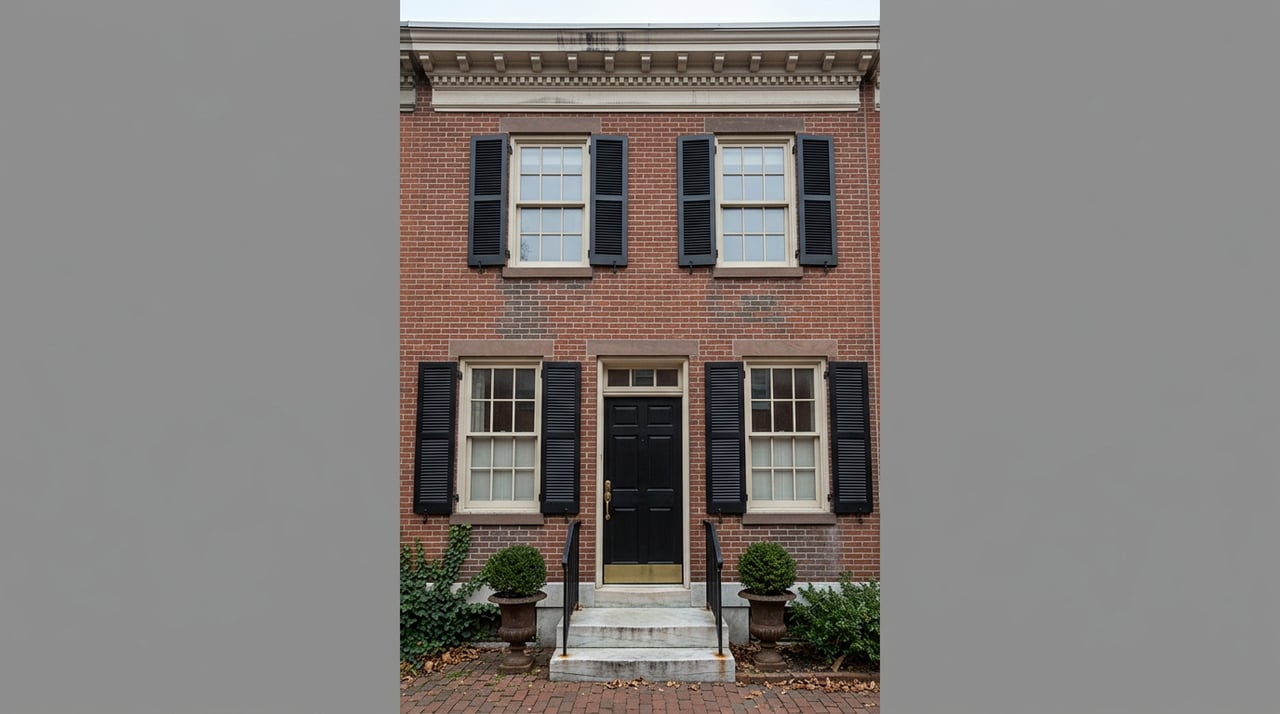
The Fells Point Listing Detail That's Actually a Countdown Clock
September 10, 2026
September 10, 2026
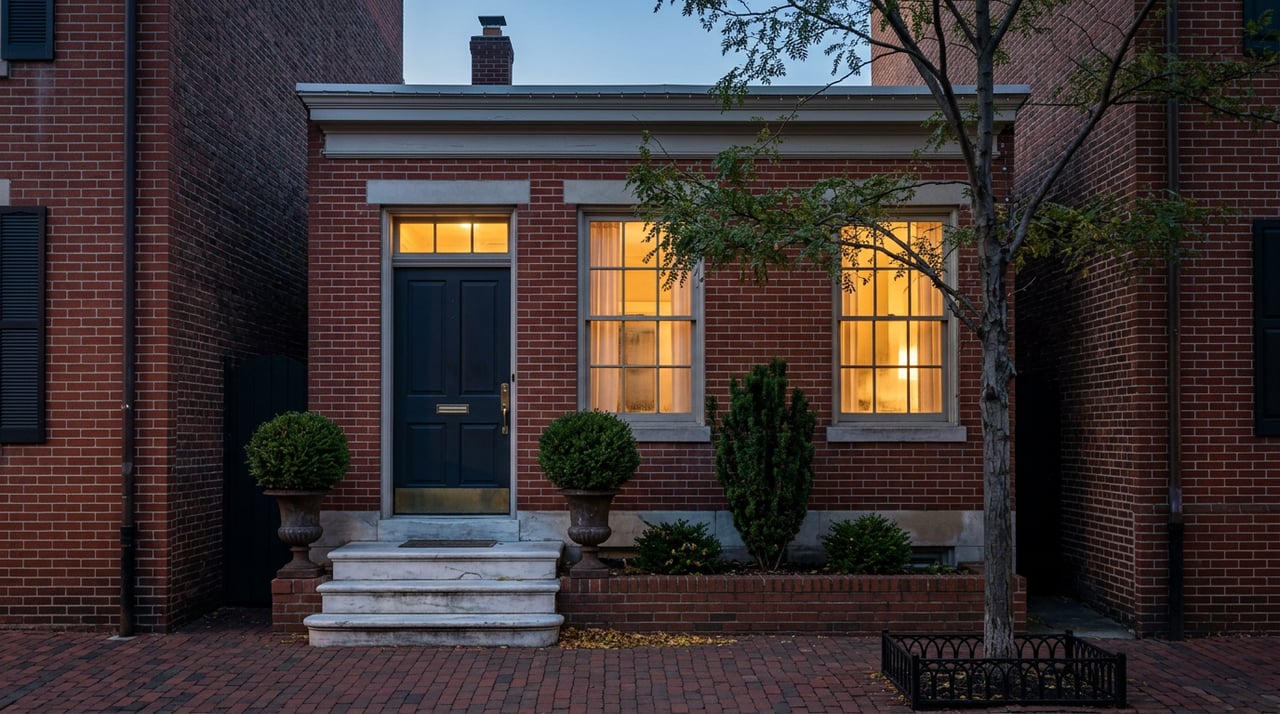
Two rowhomes go up for sale on the same Fells Point block within a month of each other. Same square footage, same brick, same distance to Broadway Square. One lists for $565,000. The other, nearly identical, lists for $505,000. A buyer comparing them on price per square foot alone would assume the cheaper one is the better deal, or that the pricier one has some upgrade the listing photos aren't showing.
What the photos don't show is a number buried in the listing remarks: years remaining on the CHAP tax credit. The $565,000 rowhome has nine years left. The $505,000 rowhome has one. Both sellers priced in the same underlying benefit. One buyer is about to inherit a full decade of it. The other is about to inherit a single tax year before the bill resets to full value.
This is the mechanism nobody explains clearly enough before a buyer writes an offer in this neighborhood: the CHAP tax credit is not a permanent discount. It's a fixed-term benefit with an expiration date, and that date belongs in your underwriting math as much as the interest rate on your loan.
Baltimore City's Commission for Historical and Architectural Preservation runs the Historic Rehabilitation and Restoration Tax Credit Program, generally shorthanded on listing sheets as the CHAP tax credit. Established in 1996, the program has driven more than $1.3 billion into historic rehab work across the city's designated districts since 1997, with more than 4,300 projects completed, Fells Point among the neighborhoods that qualify.
The credit isn't a percentage-off coupon. It's a ten-year freeze on the increase in your city property tax bill that would otherwise result from a qualifying renovation. If you buy a shell, gut it, and the city reassesses the finished home at a much higher value, CHAP lets you pay tax on close to the pre-renovation value for a full decade, rather than the new, higher one. The credit is calculated once, at approval, and then runs unchanged for the entire ten years. It applies only to the city real property tax line, not to state or county obligations, not to water bills, not to anything else on your annual statement.
To qualify, the rehab has to be substantial, generally more than 25 percent of the property's pre-renovation full cash value, and the owner has to get preliminary approval from CHAP staff before any work begins, including interior demolition. Skip that step and the credit isn't available no matter how much money you put into the house.
Here's a version of the calculation, using round numbers to show the mechanics rather than any specific address. Say a Fells Point shell is assessed at $150,000 before renovation. A full CHAP-compliant rehab brings the finished home's assessed value to $400,000. That's a $250,000 increase. At Baltimore City's 2026 real property tax rate of roughly $2.248 per $100 of assessed value, that $250,000 difference works out to about $5,620 a year the owner is not paying, for as long as the credit has years left.
That number is not abstract. Listings in this exact real estate market have quoted it directly. One recent rowhome on a tree-lined Fells Point block backing to a pocket park cited five years remaining on the tax credit, worth $4,436.21 a year in savings. A second Fells Point listing near Patterson Park described itself outright as a "CHAP Tax home," treating the credit as a selling point on par with a renovated kitchen. A short walk away in Canton, the same math shows up on a different rowhome: roughly two years remaining on its CHAP credit, worth almost $10,000 over that stretch before the bill resets. The mechanism is citywide. The listing that spells out the actual years and dollars, wherever it sits, is the one worth reading closely.
That's the piece a seller's price is often built around. A frozen $5,000-plus annual savings changes what a buyer's monthly mortgage payment looks like at a given sale price, which changes what buyers can qualify for, which changes what the seller can reasonably ask. The credit doesn't just save money. It effectively lets a seller price the home higher while keeping the buyer's all-in monthly cost competitive with a non-CHAP rowhome down the street.
The trouble is that the credit is fixed to the property's timeline, not the buyer's. It starts running with the first assessment cycle after the renovation is certified complete, and it counts down from there regardless of who owns the house. A buyer who closes in year eight of a ten-year credit gets two years of frozen taxes and then a full reset to current assessed value. A buyer who closes in year one gets nearly the whole benefit.
A simplified illustration of what that looks like on the $5,620-a-year example above:
| Years remaining at closing | Total remaining benefit | What happens after |
|---|---|---|
| 9 years | $50,580 | Tax bill resets to full assessed value in year 10 |
| 5 years | $28,100 | Tax bill resets to full assessed value in year 6 |
| 1 year | $5,620 | Tax bill resets to full assessed value next cycle |
Same house, same frozen dollar amount per year, wildly different totals depending on where in the ten-year window the sale lands. A buyer who doesn't ask the remaining-years question is effectively negotiating on the wrong number, comparing list prices as if the underlying tax position were identical when it isn't.
The credit also comes with a condition that survives the sale: any additional exterior work has to go back through CHAP for approval while the credit is active, or the owner risks losing what's left of it. This applies to the buyer, not just the original renovating owner. Someone who buys a CHAP-credited rowhome and swaps out windows or repoints brick without checking in first isn't just risking a stop-work order on that specific project. They're risking the remaining years of a credit that may be worth tens of thousands of dollars.
It's also worth keeping two separate incentive programs straight, because listing language sometimes blurs them. The city's CHAP credit described here is a property tax freeze administered by Baltimore City. Maryland's Historic Revitalization Tax Credit, administered by the Maryland Historical Trust, is a different animal entirely, a one-time state income tax credit worth 20 percent of qualified rehab costs, capped at $50,000 in a 24-month period. A property can potentially touch both programs, but they run on different clocks, different agencies, and different paperwork. Assuming one covers the other is its own way to get surprised.
None of this shows up on a standard comparative market analysis, and listing remarks aren't always precise about the exact expiration date. Before an offer goes in on a CHAP-credited Fells Point rowhome, a few steps are worth the hour they take:
If your Fells Point rowhome still has meaningful years left on its CHAP credit, that's a concrete number worth stating precisely in the listing rather than leaving vague. Buyers and their lenders can verify a specific dollar figure and a specific expiration date far more easily than they can trust a general claim about "low taxes." A seller who can hand a buyer's agent the exact remaining-year math is removing a piece of due diligence that would otherwise slow the deal down or spook a buyer late in the process.
Does the CHAP tax credit transfer automatically when a home sells? Yes. The credit stays with the property and passes to the new owner for whatever years remain in the original ten-year term. It isn't tied to the person who did the renovation.
Can a new owner lose the credit after closing? Yes, if exterior work is done without checking in with CHAP first. The credit is conditioned on the property continuing to meet CHAP's guidelines for the full ten years, not just at the moment of certification.
Is the CHAP credit the same as Maryland's Historic Revitalization Tax Credit? No. CHAP's credit is a Baltimore City property tax freeze on the assessment increase from a renovation. Maryland's Historic Revitalization Tax Credit is a separate state income tax credit with its own application, cap, and administering agency.
Where can I confirm how many years are left on a specific property? Baltimore City's Department of Finance calculates and tracks the credit and can confirm the certification date and remaining term for a specific address.
A Fells Point rowhome's asking price often has more embedded in it than square footage and finishes. If you're weighing an offer or pricing a listing in this neighborhood, The Baldwin & Griffin Group of Compass can walk through the specific numbers on a specific address before you're mid-negotiation. Get in touch.
Stay up to date on the latest real estate trends.