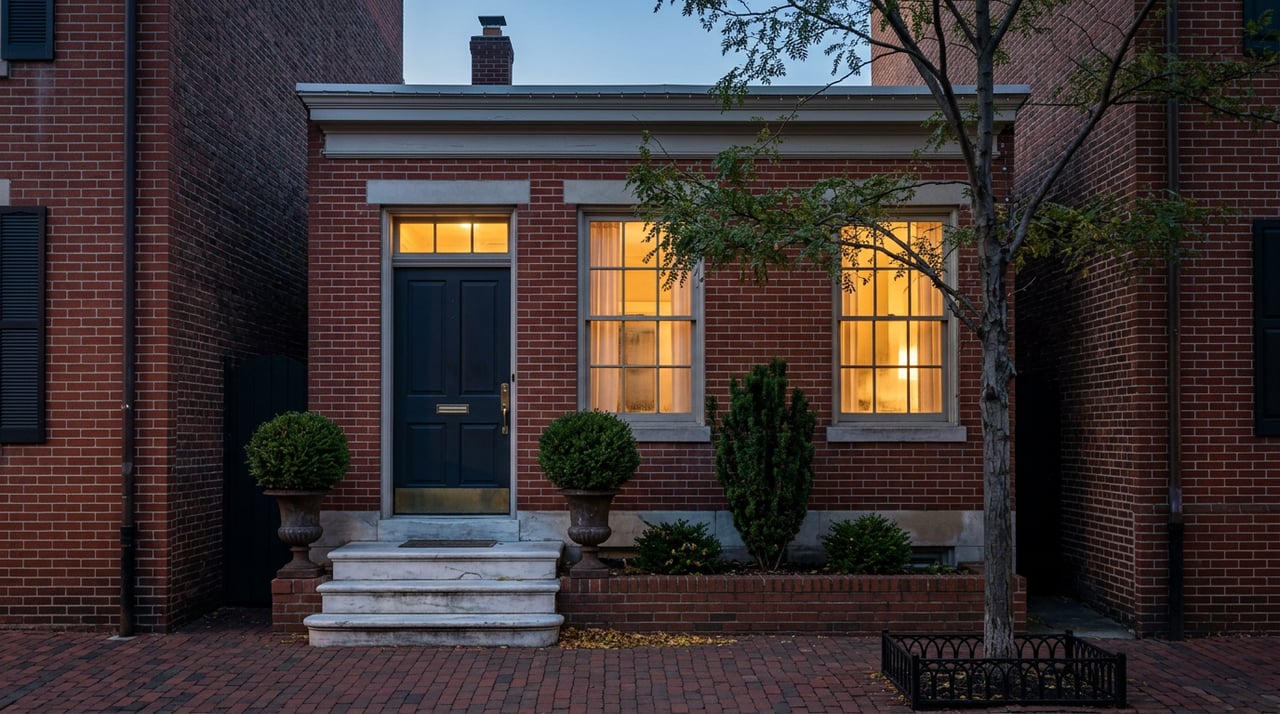
From Weekend Escape To Full-Time Home In Talbot County
July 23, 2026
July 23, 2026
Thinking about turning your Talbot County getaway into your everyday home? It is an exciting move, but it comes with a different set of day-to-day questions than owning a weekend place. If you are weighing lifestyle, upkeep, and commute realities, this guide will help you see what full-time living in Talbot County can really look like. Let’s dive in.
A weekend home lets you focus on the highlights. Full-time living asks you to think about routines, services, travel patterns, and property maintenance in a more practical way. In Talbot County, that shift matters because the county balances shoreline living, historic towns, and a long-term goal of preserving its rural character while supporting a resilient community.
Talbot County also offers a scale that feels manageable for many buyers making this change. The county reports more than 600 miles of shoreline and says it is about 90 minutes from both Baltimore and Washington, D.C. Census QuickFacts shows a 2025 population estimate of 38,238, with 32% of residents age 65 and over and a mean travel time to work of 24.7 minutes.
For many buyers, the biggest question is simple: where will daily life work best? Easton, St. Michaels, and Oxford each offer a different rhythm. The right fit depends on whether you want more convenience, more seasonal energy, or more quiet.
Easton is often the strongest full-time base of the three towns. As the county seat, it offers a broader year-round service base and a steadier local calendar. If you want a home base that still feels connected to Talbot County’s charm but supports a fuller weekly routine, Easton often rises to the top.
The town is home to University of Maryland Shore Medical Center at Easton. Its arts calendar also stays active across much of the year, with the First Friday Gallery Walk running from April through December, Plein Air Easton in July, and Fire & Ice bringing winter activity downtown.
Transportation options add another practical layer. Talbot County notes that Delmarva Community Transit offers route service Monday through Friday with limited Saturday service and mobility-on-demand in Easton. BayRunner Shuttle also has a daily Easton Airport stop serving BWI, the BWI MARC/Amtrak station, and Baltimore Greyhound.
If part of your goal is keeping that getaway energy even after you move full time, St. Michaels may feel appealing. The town has a more seasonal, event-driven pulse, which can make everyday life feel close to vacation, especially during the warmer months. At the same time, that energy can mean busier weekends and holidays.
The town’s official events pages highlight annual programming, a farmers market from April through November, summer concerts in the park from May through August, and holiday events in December. Its history as a shipbuilding town that later became a tourist and sailing haven helps explain why full-time living here tends to come with a stronger weekend rhythm.
Oxford offers a different experience entirely. The town describes itself as a waterbound village with a long maritime history, and with a population of less than 1,000, it is the quietest and smallest of the three. If you want calm, character, and a slower pace, Oxford may be the setting that feels most natural.
Even with its small size, Oxford has year-round community touchpoints. The town lists basic services such as a library, police, and fire and ambulance, and the Oxford Community Center hosts meetings, classes, lectures, dinner theater, and performances. The Oxford-Bellevue Ferry, operating continuously since 1836, remains one of the town’s notable landmarks.
Before you make the leap to full-time living, it helps to think beyond curb appeal. Ask yourself what you want a normal Tuesday to feel like, not just a summer Saturday.
A simple way to think about the three towns is this:
A waterfront home can feel effortless during occasional visits. As a primary residence, it becomes part of your regular maintenance plan. In Talbot County, flood awareness and shoreline upkeep are not side issues. They are part of responsible ownership.
Talbot County says standard homeowners insurance does not cover flood damage. The county recommends reviewing flood maps, elevation certificates, and tide predictions when you own or consider buying in flood-prone areas.
The county’s stormwater resources also point to shoreline restoration and erosion and sediment control as common priorities. For you as a buyer, that means a waterfront property may offer an incredible lifestyle, but it usually asks for more planning and oversight than a comparable inland home.
If you are moving from part-time to full-time ownership, expect to pay closer attention to:
Talbot County’s older homes are a major draw, especially in places like Easton, St. Michaels, and Oxford. But historic character often comes with added review steps before exterior work begins. If you are used to making quick updates at a suburban property, this can be one of the biggest adjustments.
Easton, St. Michaels, and Oxford all maintain historic-district commissions or guidelines. Easton’s commission issues certificates of appropriateness for construction, alteration, moving, and demolition. St. Michaels’ commission reviews most exterior changes and demolition, and Oxford maintains historic-district guidelines through its commission.
Talbot County’s Historic Preservation Commission says the county historic-district ordinance dates to 1976 and was created to safeguard historic properties and scenic landscapes. In practical terms, even routine exterior replacements or visible updates may require more advance coordination than you expect.
If you are considering a historic or older property, it helps to ask early:
For some buyers, the dream only works if they can still reach Baltimore or Washington, D.C. on a workable schedule. Talbot County says it is about 90 minutes from both cities, which makes regional access possible. But full-time living here is best understood as traffic-sensitive rather than commute-proof.
MDOT warns that seasonal congestion on US 50 can be a barrier between the Eastern Shore and the Baltimore-Washington metro area. That is especially important if you need to travel on summer weekends or around holiday periods. A route that feels simple on a quiet weekday can look very different during peak seasonal traffic.
That said, Talbot County is not cut off. Delmarva Community Transit provides Mid-Shore service Monday through Friday with limited Saturday service, and BayRunner Shuttle’s Easton stop offers daily service to BWI, the BWI MARC/Amtrak station, and Baltimore Greyhound.
For many buyers, Talbot County works best when your schedule has some flexibility. It can fit well for:
The biggest difference between a second home and a primary home is not just how often you are there. It is how closely your home has to support your real life. You are no longer only buying scenery or a weekend mood. You are choosing where errands happen, where maintenance gets managed, and how travel fits into your week.
In Talbot County, that often means balancing lifestyle with logistics. Easton may offer the easiest year-round base, St. Michaels may preserve more of that escape feeling, and Oxford may give you the quietest daily setting. Waterfront and historic homes can be deeply rewarding, but they usually ask for more planning, more review, and more ongoing attention.
If you are considering a move from part-time retreat to full-time residence, the right strategy is to evaluate the property and the town together. That is where local guidance can make the transition feel much clearer and much smoother.
If you are exploring a full-time move on the Eastern Shore, The Baldwin & Griffin Group of Compass can help you compare towns, evaluate lifestyle fit, and navigate the practical details with a high-touch, tailored approach.
Stay up to date on the latest real estate trends.